Sachin Dahar
Sachin Dahar Creates a Distinct Music Footprint Through Collaborations and Independent Projects
By Chandigarh News Entertainment Desk
The journey of a singer is often easier to understand through the projects that accumulate around their name. While individual songs can introduce an artist, a wider selection of work begins to reveal something more lasting: consistency, professional associations and an identity that is no longer tied to a single title. Sachin Dahar is reaching that stage through a music portfolio that brings together collaborations and individually presented projects.
His work as a singer can be traced across Kaale Sheshe (feat. Malwai Partap), My Zone (feat. Malwai Partap), Raat Da Raja, Dil Di gal, Kudi Online (feat. Harry Balachour), Tikki Ki theli (Punjabi Beat), Pal Pal Jena (feat. Harry Balachour), Pini Chod Di (feat. Harry Balachour), Pite Nahi Ham, Sharab, System Hang, The Protest and Raaj Chale.
Rather than treating these titles simply as a numerical achievement, the more interesting story lies in how they collectively shape Dahar's identity as a singer. Some connect his name repeatedly with other artists, while others give him separate points of recognition. The result is a portfolio with several interconnected parts instead of one dominant project surrounded by minor credits.
A Career Record Built Through Individual Projects
Music careers are rarely linear. A singer can work on one project with a collaborator, appear independently on another and then return to a familiar professional association later. Over time, those individual decisions create a catalogue that reflects the artist's continuing participation in music.
That pattern can be seen in Sachin Dahar's body of work.
There are projects where another artist appears prominently in the title and others where Dahar's singing credit stands without the same featured-artist format. This creates a useful balance within his portfolio.
It also means there is no single route through which audiences have to discover his work.
A person could encounter My Zone first, while another might begin with Dil Di gal. Someone else could come across Pini Chod Di, System Hang or Raaj Chale. Each project provides its own introduction before becoming part of the wider collection associated with the singer.
That is one of the practical ways a musical identity develops. Recognition begins with individual titles but becomes stronger when listeners can connect those titles back to a larger body of work.
Recurring Collaborations Become Part of the Story
Collaborations occupy a meaningful place in Sachin Dahar's portfolio, particularly because two names appear more than once.
Malwai Partap features in two projects, while Harry Balachour features in three. Together, these recurring associations form a distinct section of Dahar's work without accounting for everything he has done.
The Malwai Partap connection can be seen through:
Kaale Sheshe (feat. Malwai Partap)
My Zone (feat. Malwai Partap)
The Harry Balachour connection extends across:
Kudi Online (feat. Harry Balachour)
Pal Pal Jena (feat. Harry Balachour)
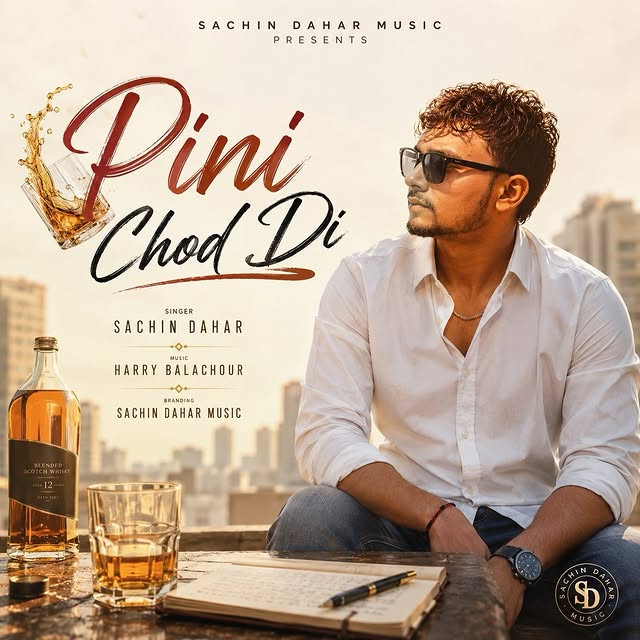
Pini Chod Di (feat. Harry Balachour)
What makes these collaborations relevant is their recurrence.
A one-time collaboration can exist as an isolated project. When the same names are connected across multiple titles, however, they become a recognizable part of an artist's professional record.
For Sachin Dahar, these five projects establish two such connections while leaving the majority of his portfolio outside those recurring partnerships.
Kaale Sheshe and My Zone Establish a Two-Project Association
Kaale Sheshe and My Zone bring Sachin Dahar and Malwai Partap into the same section of his project history.
Both titles feature Malwai Partap, with Dahar contributing as a singer.
There is no need to assign an artificial narrative to the songs in order for the collaboration to be relevant. The factual connection itself provides useful context: the two artists are associated across two separate music projects.
That makes the pairing recognizable within Dahar's wider work.
It also demonstrates how a singer's catalogue can contain smaller clusters of related credits. These clusters do not have to represent an album, series or particular musical style. Sometimes the connection is simply that artists have worked across more than one title.
As additional projects surround those collaborations, they become part of a much larger professional picture rather than the sole basis of the singer's identity.
Three Titles Link Sachin Dahar With Harry Balachour
The association with Harry Balachour is represented through a different set of projects.
Kudi Online, Pal Pal Jena and Pini Chod Di each feature Harry Balachour, creating a three-title connection within Sachin Dahar's portfolio.
The repeated collaboration is notable because it gives listeners several opportunities to encounter the same artist names together.
Someone who first discovers Kudi Online may later recognize the connection on Pal Pal Jena. Likewise, Pini Chod Di becomes another title through which that professional association can be identified.
At the same time, each remains a separate project.
This distinction is important because a catalogue does not need to force related credits into a single narrative. Multiple collaborations can simply demonstrate that artists have worked together more than once, while the individual songs retain their separate identities.
For Dahar, the Harry Balachour projects represent one established strand within a much wider selection of singing work.
Raat Da Raja and Dil Di gal Strengthen the Individual Side of the Portfolio
Away from featured collaborations, Raat Da Raja and Dil Di gal contribute to the individually presented side of Sachin Dahar's work.
Both titles have their own identity within his catalogue.
It would be tempting to infer musical moods or lyrical subjects from their names, particularly with a title such as Dil Di gal. But a professional artist profile benefits from distinguishing between what a song is called and what has actually been established about its content.
For that reason, their importance here is more straightforward.
They are projects featuring Sachin Dahar in the role of singer, and each expands the selection of music connected with his name.
As the number of individually identifiable titles increases, audiences gain more opportunities to encounter an artist without necessarily arriving through a featured collaboration.
That helps broaden the singer's presence beyond recurring professional partnerships.
Tikki Ki theli (Punjabi Beat) Adds Another Recognizable Title
Among the names in the portfolio, Tikki Ki theli (Punjabi Beat) immediately stands apart because of the wording included directly in its title.
The project forms another part of Sachin Dahar's work as a singer.
Its distinctive name also illustrates something important about building a catalogue: individual recognition does not always require every project to resemble the one before it.
A varied collection of titles can make it easier for separate projects to remain identifiable when audiences encounter them individually.
At the same time, responsible reporting means not turning the words “Punjabi Beat” into unsupported claims about the complete musical arrangement or style of the project. Those details should come from confirmed information about the work rather than assumptions based on its title.
The project can instead be recognized for what is established—another singing credit within Dahar's growing professional record.
Sharab and Pite Nahi Ham Hold Their Own Places
Sharab and Pite Nahi Ham are another two titles connected with Sachin Dahar.
Their names may appear to invite comparison, but there is no need to manufacture a relationship between the songs without information establishing one.
Each project deserves to stand separately within the catalogue.
This is particularly relevant when documenting a singer with a growing amount of work. Trying to connect every title through an invented theme can distort the actual career story. Sometimes the more meaningful connection is simply the artist behind the projects.
Here, that connection is Sachin Dahar and his contribution as a singer.
Both Sharab and Pite Nahi Ham add individual credits to a portfolio that already contains collaborative projects and several other independently recognizable titles.
System Hang, The Protest and Raaj Chale Show the Breadth of Project Names
Toward another part of the collection are System Hang, The Protest and Raaj Chale.
Even without attaching unverified descriptions to their music, the three names demonstrate how differently individual projects can be presented.
System Hang has an immediately contemporary title. The Protest carries a completely different name, while Raaj Chale establishes another distinct identity.
What those names do not establish on their own are the songs' genres, lyrical subjects or creative intentions.
That distinction matters.
Calling The Protest a social commentary track merely because of its title, for example, would turn an assumption into a factual claim. Similarly, System Hang should not automatically be categorized according to what its name might suggest.
The reliable connection between these projects is simpler: Sachin Dahar has worked on each as a singer.
By keeping the focus there, the portfolio can be documented without adding details that have not been established.
The Projects Form Several Paths Back to Sachin Dahar
Viewed from another perspective, Dahar's catalogue can be divided into several discovery paths.
One path runs through Malwai Partap and the projects Kaale Sheshe and My Zone.
A second comes through Harry Balachour and the three titles Kudi Online, Pal Pal Jena and Pini Chod Di.
Beyond those collaborations, listeners have a separate route through Raat Da Raja, Dil Di gal, Tikki Ki theli (Punjabi Beat), Pite Nahi Ham, Sharab, System Hang, The Protest and Raaj Chale.
The starting points differ, but the singer connecting them remains the same.
This becomes increasingly valuable as an artist's professional record grows. Instead of every search, recommendation or reference depending on one particular song, multiple projects can independently introduce the artist's name.
That creates a more distributed musical presence.
Why a Portfolio Can Tell More Than a Single Breakthrough
Music coverage often concentrates heavily on the idea of a “breakthrough” song. While an individual track can certainly become important to an artist's career, focusing only on that possibility can overlook how careers are actually built.
Many singers establish themselves gradually.
They work across projects, develop professional connections and accumulate a record that becomes more meaningful with time. One title leads to another, collaborations become part of the history, and eventually audiences have enough material to explore the artist rather than only a particular song.
Sachin Dahar's current portfolio can be viewed from this perspective.
The value of the collection does not require claiming that every project has achieved the same level of attention. There is also no need to describe any particular song as a hit without evidence supporting that description.
The stronger observation is that Dahar now has a substantial selection of singing work attached to his name.
That is a measurable development in itself.
Thirteen Titles, but One Consistent Professional Role
Across the complete collection, Sachin Dahar's role remains consistent: singer.
His work spans:
Kaale Sheshe (feat. Malwai Partap), My Zone (feat. Malwai Partap), Raat Da Raja, Dil Di gal, Kudi Online (feat. Harry Balachour), Tikki Ki theli (Punjabi Beat), Pal Pal Jena (feat. Harry Balachour), Pini Chod Di (feat. Harry Balachour), Pite Nahi Ham, Sharab, System Hang, The Protest and Raaj Chale.
Presenting the projects together makes the scale of the portfolio clear without requiring the number itself to be repeated throughout the article.
More importantly, the collection documents different types of professional connections around the singer.
There are recurring collaborators, individually presented titles and multiple projects capable of introducing Dahar's name independently.
Sachin Dahar Moves Forward With a Broader Musical Identity
At this point, the story surrounding Sachin Dahar is becoming larger than any one project.
Kaale Sheshe and My Zone establish his repeated association with Malwai Partap. Kudi Online, Pal Pal Jena and Pini Chod Di create another recurring connection through Harry Balachour.
The rest of the portfolio adds its own layer.
Raat Da Raja, Dil Di gal, Tikki Ki theli (Punjabi Beat), Pite Nahi Ham, Sharab, System Hang, The Protest and Raaj Chale each give the singer another project through which his work can be recognized.
Together, they create something that cannot be achieved through a single credit: context.
They show a singer whose name is connected with numerous projects and more than one professional collaboration. They also give audiences enough material to explore his work from different starting points.
For Sachin Dahar, this expanding record represents a stage where individual projects are increasingly becoming pieces of a larger musical identity.
The titles may remain separate, and each may ultimately develop its own place within his journey, but collectively they establish a clear foundation around his work as a singer.