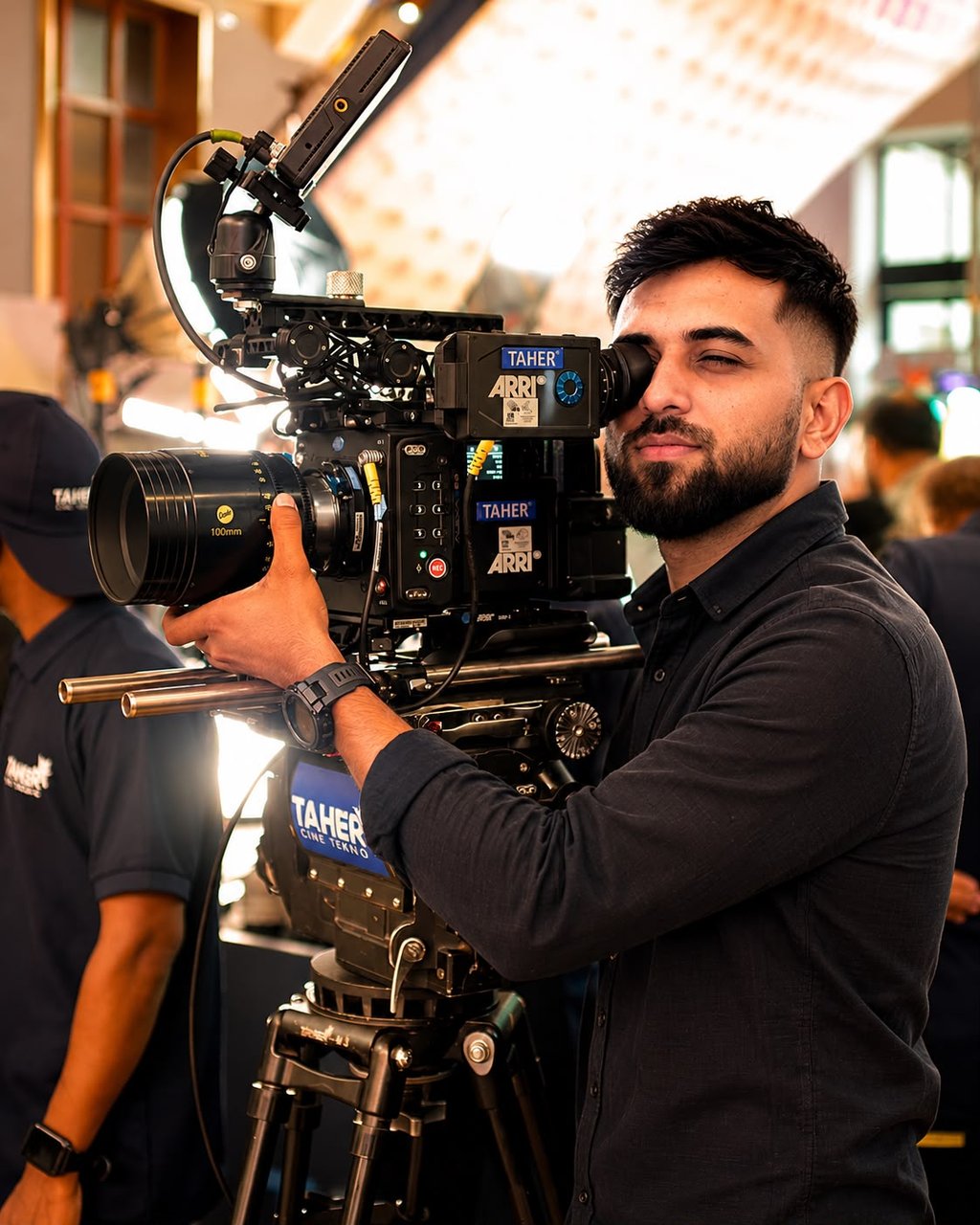
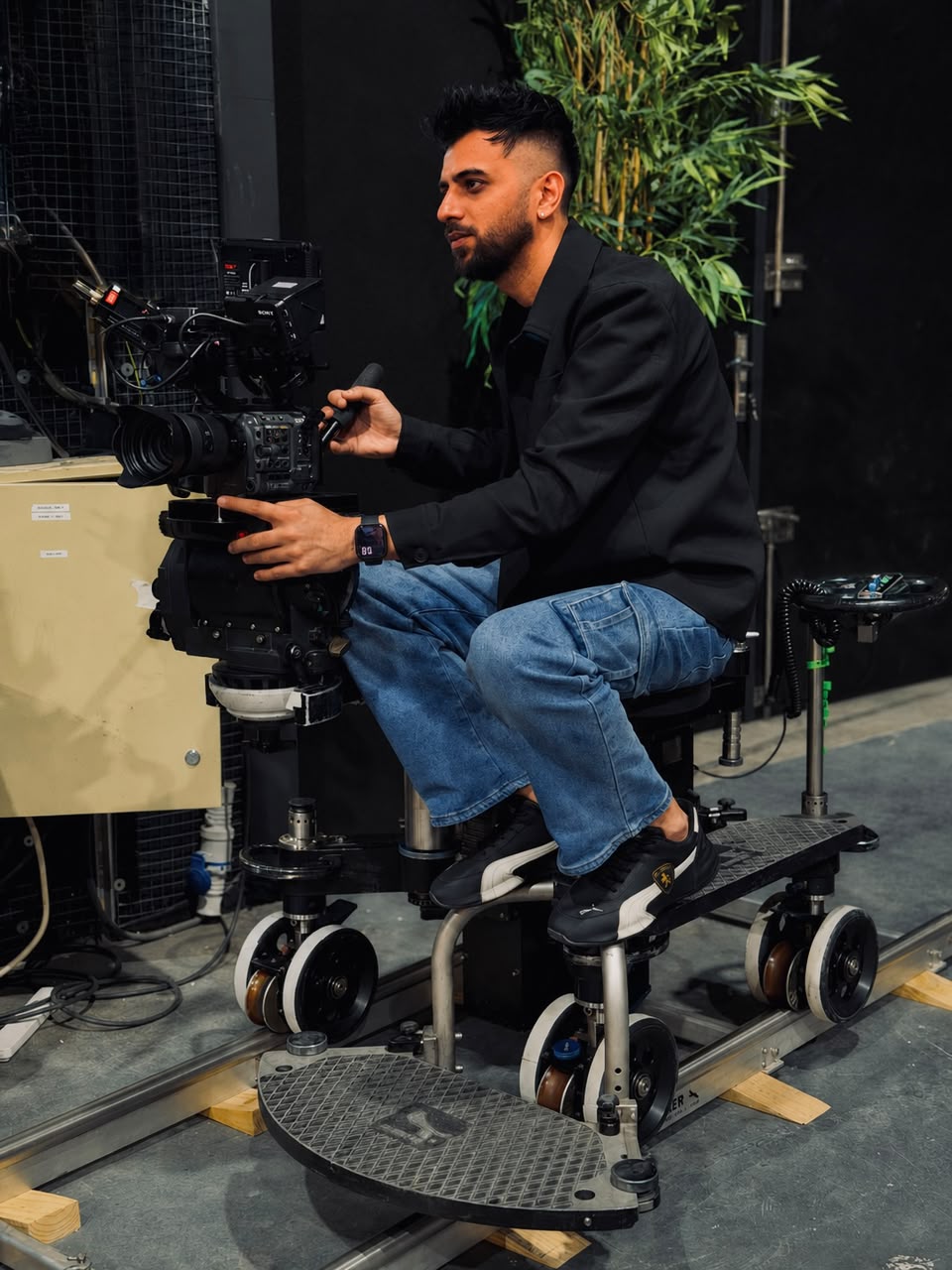
Vishal Camera Operator
Inside the Frame: Vishal Camera Operator and the Technical World of Screen Production
By Chandigarh News Entertainment Desk
A finished film rarely reveals how much coordination was required to capture its images. By the time audiences watch a scene, the equipment, repeated takes, camera positioning and communication between departments have disappeared from view. What remains is simply the frame.
For camera professionals, however, that frame is the workplace.
Vishal's credited projects provide an opportunity to look at this less-visible side of screen production. His portfolio includes Hindi films, Punjabi cinema and music videos, placing his work within production environments that can differ considerably in scale, pace and visual requirements.
Rather than approaching his credits simply as a career timeline, his body of work can be viewed through a technical question: what does working behind a camera actually demand when the format keeps changing?
Camera Operation Begins Before Recording
Operating a camera is sometimes misunderstood as the act of recording whatever is happening in front of the lens. Professional screen production is considerably more organised than that.
A shot exists within a plan.
Where the performers stand, how they move, where the camera is positioned and whether that camera remains stationary or moves through the scene can all influence the final image.
The operator also needs awareness of the boundaries of the frame. Something positioned just outside the visible image may be irrelevant to audiences but extremely important on set. Crew members, equipment and other production elements often have to remain outside what the camera captures.
Timing adds another consideration.
If a camera movement is planned around an actor's movement, both need to work together. A movement beginning too early or late can alter the intended composition.
These practical responsibilities make camera operation part technical execution and part continuous coordination.
Vishal's Feature Film Credits
Vishal's credited film portfolio currently contains eight projects across different areas of cinema.
Production Format De De Pyaar De 2 Feature Film Bade Miyan Chote Miyan Feature Film Bina Band Chal England Feature Film The Vaccine War Feature Film Chal Mera Putt 2 Feature Film The Great Sardaar Feature Film Super Singh Feature Film The Black Prince Feature Film
The value of looking at these titles together is not to assume that the same camera methods were used on each production. Without production-specific information, such a conclusion would be speculative.
What can be observed is the variety of projects represented in the credits.
Hindi and Punjabi film productions both appear within Vishal's professional portfolio, creating a filmography that extends beyond one section of the industry.
Framing Is More Than Keeping a Subject Visible
One of the fundamental ideas in camera work is framing.
At its simplest, framing determines what audiences see and what remains outside the image. In professional production, however, framing interacts with movement, performance, set design, lighting and the visual intentions of a scene.
Consider a performer walking through a location.
If the camera is intended to follow that person, maintaining the required composition means responding to changes in position throughout the shot. If multiple performers enter the frame, the visual balance can change again.
A static scene creates different considerations. Small changes in an actor's position may become more noticeable when the camera itself is not moving.
The appropriate approach depends on what the production is trying to achieve.
This is why camera operation cannot be separated from the larger cinematography process. Operators execute shots as part of a visual system rather than making every creative decision independently.
Why Repeat Takes Matter
Audiences normally see one finished version of a shot. Production crews may experience that same moment repeatedly.
Multiple takes can be required for many reasons, and repetition creates an important technical challenge: consistency.
If a camera follows a particular path during one take, a substantially different movement during the next can produce footage that behaves differently during editing. The same applies to timing and framing.
Continuity becomes particularly relevant when footage from separate setups has to appear as one uninterrupted sequence.
The responsibility for continuity extends beyond any single crew member, but camera consistency forms part of that larger process.
For professionals working behind the lens, this means attention does not end when one usable-looking take has been completed. Each repetition still needs concentration.
Feature Films Require Long-Form Visual Thinking
Feature films are constructed from many scenes that eventually need to feel like parts of the same world.
A shot does not exist only for its own visual impact. It also contributes to a sequence, and that sequence contributes to a much longer narrative.
This creates a particular production environment for camera teams.
Scenes may be captured from multiple positions and at different times. Material recorded separately can eventually appear only seconds apart in the final edit. Maintaining a coherent visual approach therefore involves coordination across the wider cinematography and production process.
Vishal's eight film credits place his professional work within this long-form production environment.
Importantly, this does not mean every one of those films presented identical technical challenges. Each production establishes its own requirements.
The shared element is participation in feature filmmaking, where individual shots ultimately become small components of a much larger finished work.
Ten Music Videos Add a Short-Form Dimension
The other major part of Vishal's credited portfolio comes from music video production.
His listed music video credits are:
Chote Tere Jehe
Lion of The Jungle
Chacha Chacha
Kirdar
Shuk La Patase
Sahmne Hundi Oh
Black Suit
Safar
Jimmy Jimmy
Get Use
These projects add ten short-form productions to a portfolio that already contains eight feature films.
That distinction is useful because a music video communicates differently from narrative cinema.
A song provides an existing rhythmic structure, while the visuals may focus on performance, atmosphere, movement, styling or a separate narrative concept. There is considerably less screen time than in a feature film, meaning the visual identity often has to become clear quickly.
This gives camera teams another type of production environment to work within.
When Camera Movement Works — and When It Doesn't
Technical camera work is not about creating the maximum possible movement.
A moving camera can bring energy to a sequence, follow a performer or reveal information within a location. A stationary composition can be equally effective when the scene requires stability or controlled framing.
The important consideration is purpose.
Movement also introduces practical demands. The relationship between camera position and performer position changes continuously, meaning framing has to be maintained throughout the shot.
A production may use different tools and methods depending on its requirements, but it would be inaccurate to assign particular equipment or techniques to Vishal's credited projects without verified production information.
What his portfolio does establish is experience associated with productions where camera operation forms part of the wider visual process.
That distinction keeps the professional record factual while still recognising the technical environment surrounding the role.
Film Sets Depend on Department-to-Department Coordination
The camera department cannot produce the intended image entirely by itself.
Lighting directly affects what the camera sees. Art and production design influence what exists inside the frame. Costumes and makeup affect the appearance of performers. Direction establishes the dramatic requirements of a scene, while performers need to coordinate their actions with the technical setup.
This creates constant interaction between creative and technical departments.
Even practical considerations can affect a shot.
A restricted location can limit available camera positions. Exterior conditions may change during production. Performers may need space to complete an action, while equipment also requires physical room.
Solving such issues is part of filmmaking as a collaborative process.
The audience is rarely aware of these negotiations because they occur before the final image exists.
Two Formats, One Behind-the-Camera Profession
Vishal's portfolio can be divided numerically into eight feature films and ten music videos, but the more interesting distinction is the difference between the two formats.
Production Area Portfolio Presence General Production Character Feature Films8 credited projects Individual shots contribute to longer narrative sequences Music Videos10 credited projects Visuals operate within a shorter, music-led format
This comparison describes the formats rather than claiming that Vishal personally used a particular lens, rig, frame rate or camera system on any individual project.
That distinction matters when documenting technical professionals accurately.
A credit can establish participation in a production. It does not automatically reveal every piece of equipment used or every responsibility handled during the shoot.
What the credits demonstrate clearly is range.
The same professional portfolio includes feature cinema and music-driven visual content.
Technical Precision Is Often Invisible to the Audience
Some of the most effective technical work in cinema attracts little attention while audiences are watching.
If framing feels natural, viewers concentrate on the performer. If a camera movement works with a scene, audiences may follow the action without consciously analysing how the camera moved.
That invisibility is part of the nature of filmmaking.
A technical mistake can immediately attract attention, while correctly executed work can disappear into the finished production.
Camera professionals therefore operate in an unusual space. Their work contributes directly to what audiences see, yet successful execution may make viewers less aware of the technical process rather than more aware of it.
For Vishal Camera Operator, the credited projects form a public record of work carried out within this largely unseen production environment.
Why Different Formats Matter for a Camera Professional
Working across different formats exposes a professional to changing production structures.
Feature films and music videos do not have identical objectives. One may spend substantial screen time developing a conversation or narrative sequence. The other may move between visual ideas within the duration of a song.
The pace on set can also depend on circumstances unique to each production.
For that reason, it is more accurate to describe Vishal's portfolio through its variety than to make unsupported claims about particular camera techniques.
His work connects with commercial film projects, Punjabi cinema and music video production. Those categories alone represent different areas of screen content.
Across eighteen credited projects, the recurring professional setting is the space behind the camera.
A Portfolio Defined by What Happens Before the Final Cut
By the time footage reaches audiences, much of the camera crew's working process has vanished.
Viewers do not see the marks used to position performers. They do not experience the waiting between setups. They do not watch unsuccessful takes being reset or equipment being prepared for another shot.
They see only what survived the production and editing process.
This difference between the set and the screen helps explain why technical credits matter. They document the professionals involved in creating material even when those professionals are not visible in the finished product.
Vishal's credits across films and music videos provide that kind of record.
Instead of relying on promotional visibility, the portfolio is built around completed production work.
Vishal Camera Operator Across Eighteen Screen Projects
Taken as a whole, Vishal's credited body of work currently spans eighteen projects: eight feature films and ten music videos.
The feature film side includes work associated with Hindi and Punjabi cinema, while the music video side introduces a separate short-form production environment.
That combination makes the technical context of his career more interesting than simply counting titles.
Camera operation sits at the point where creative plans have to become actual recorded images. Framing has to exist physically through a camera. Planned movement has to be executed during a take. Performers, lighting and technical teams have to function together within the available production environment.
Those general demands explain the professional world surrounding Vishal's role without assigning him unverified equipment choices or responsibilities.
Ultimately, Vishal Camera Operator represents a behind-the-scenes professional portfolio spread across different forms of screen production. His credits—from feature films to music videos—document continued involvement in the process that happens before audiences ever see the finished frame.
The screen shows the final image. The credits tell us something about the people who helped make that image possible.